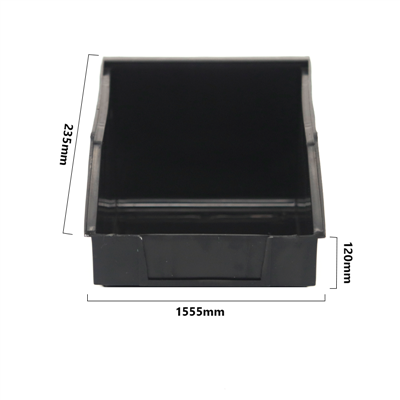

Hey there! If you've ever worked with sensitive electronic parts-think semiconductors, circuit boards, microchips, even tiny connectors-you've probably heard the phrase "static electricity is the silent killer" tossed around. I know, I've been in this game for over 10 years, helping factories, tech labs, and electronics assembly lines keep their components safe. One of the most essential tools we supply that solves this exact problem is an ESD drawer box. But let's break this down like we're chatting over a coffee, not a textbook-no stuffy jargon, promise.
First, let's get the basics straight: ESD stands for Electrostatic Discharge. That's when a static electricity charge builds up on a surface (like your sweater, a plastic bin, or even your hands) and jumps to something that can't handle it. A single ESD zap is often too small to feel, but it can fry a microchip faster than you can blink-ruining hours of work, thousands of dollars in parts, and even delaying a product launch. That's where ESD drawer boxes come in. They're not just regular plastic storage containers-they're specially designed to prevent that static charge from building up and transferring to your electronics.
Let me walk you through what makes an ESD drawer box different from your average drawer. A standard plastic drawer is just… plastic, right? It can build up static. An ESD drawer box is made with materials that are conductive or dissipative (we'll simplify that: conductive means it lets static flow away harmlessly, dissipative means it slows the charge down so it doesn't jump). Most of ours are made from anti-static plastic that's treated to have a surface resistance that falls right in the ESD safe range-around 10^6 to 10^12 ohms. That's the sweet spot: low enough to stop static buildup, but not so low that it creates a direct short circuit on your delicate parts.
Now, you might be wondering: "Why a drawer specifically? Why not a bin with a lid?" Great question. Drawer-style storage is perfect for environments like ESD cabinets or workstations, where you need quick, organized access to parts without fumbling with lids every time. Our ESD drawer boxes fit seamlessly into standard ESD cabinet systems, so you can have multiple boxes in one cabinet, each labeled for a different component type-no more digging through a pile of parts looking for that specific resistor. It's all about workflow efficiency, which is huge in electronics manufacturing where time equals money.
Wait, let's talk about the different types we offer, since one size definitely doesn't fit all. First up, our ESD Plastic Drawer is the workhorse. It's lightweight, durable, and fits most standard cabinet slots. Whether you're storing small surface-mount devices (SMDs) or slightly larger components, this one's a go-to. I've seen it used in everything from startup labs to big-name phone assembly lines-its versatility makes it a fan favorite. For parts that are extra sensitive, we have the ESD Conductive Plastic Component Box. This one has a lower surface resistance, so it actually conducts any static that touches the box straight to ground, even if a stray charge gets on the outside. It's ideal for high-precision parts like microprocessors or memory chips that can be damaged by even the smallest static spark.
If you're just starting to set up your ESD storage system and you're on a budget, our Antistatic Component Storage Box is a solid choice. It's made with anti-static plastic that prevents static from building up in the first place, so your parts stay safe even during short-term storage or transport. It's not as heavy-duty as the conductive option, but it's perfect for general component storage where you want basic protection without breaking the bank. And for those who already have ESD cabinets and need boxes that fit perfectly, our ESD Cabinet Drawer Box is designed to be a direct replacement for standard cabinet drawers. No modifying your cabinet, no fuss-just swap out your old drawers and you're good to go. I've had customers tell me they installed these in 10 minutes flat, which is exactly the kind of convenience we love.


Let me share a quick story to put this into perspective. A couple years back, we had a customer who was assembling a batch of wearable fitness trackers. They were using regular plastic drawers to store their trackers' PCBs, and they kept getting random defects-some boards would stop working right after assembly, and they couldn't figure out why. They lost about $15,000 in parts before they contacted us. Turns out, the regular plastic drawers were building up static every time someone pulled them open, and that static was zapping the delicate circuits on the boards. We supplied them with a set of our ESD Conductive Plastic Component Boxes, and the defects dropped to almost zero. That's the kind of impact these boxes have-they're not just storage, they're a safeguard for your product quality.
Now, let's clear up some myths I hear all the time. First myth: "All plastic boxes are ESD-safe." Nope. Regular plastic (even the clear storage bins you buy at the grocery store) is insulating, so it builds up static. You need to make sure the box is labeled ESD-safe, and that it meets those resistance specs I mentioned earlier. Second myth: "ESD drawer boxes are only for big factories." Wrong. Even small labs and hobbyists working with sensitive parts can benefit. If you're soldering SMDs at home, a small ESD drawer box will keep your parts safe from static when you're not working on them. Third myth: "I can use a static bag instead of a drawer." Static bags are great for transport, but they're not as practical for storage on your workstation. Drawers let you access parts quickly, and you can organize them better-so combining both (use bags for transport, boxes for workstation storage) is the best setup.
So, why choose a drawer box over other ESD storage options? Organization, mostly. When you have multiple component types, each in their own ESD drawer box, you can label them clearly and keep your workstation clutter-free. Clutter leads to mistakes-like grabbing the wrong part or knocking a bin over, which can damage parts and cause injuries. Also, drawer-style storage is stackable and space-efficient. A standard ESD cabinet can hold dozens of drawer boxes, so you can store hundreds of parts in a small footprint. That's key for facilities where floor space is at a premium.
Another thing to consider: durability. Our ESD drawer boxes are made from high-quality plastic that can stand up to the wear and tear of daily use. They don't crack easily, and they resist chemicals that are common in electronics assembly (like flux or cleaning solvents). We've had customers use our boxes for over 5 years and they still look and work like new. That means you're not just buying a short-term solution-you're investing in a tool that will last, saving you money in the long run.
Let's talk about how to use these boxes correctly, because even the best ESD box won't work if you use it wrong. First, make sure the box is grounded if you're using it on a workstation. That means connecting a grounding wire from the box to a proper ESD ground point (never just ground it to a metal desk-sometimes that's not a real ground). Second, don't overstuff the drawer. If the parts are too tight, they can rub against each other and build up static. Third, label every box clearly. Use a permanent marker or a label maker to write what's inside, part numbers, and the date you stocked it. That way, you won't waste time searching for parts, and you can track when you need to reorder.
If you're in the market for ESD drawer boxes, whether you're outfitting a new production line or just restocking your lab, we've got options for every need and budget. You can check out our full range by clicking links like ESD Plastic Drawer if you're looking for the versatile workhorse, ESD Conductive Plastic Component Box for high-sensitivity parts, Antistatic Component Storage Box for budget-friendly basic protection, or ESD Cabinet Drawer Box to replace your existing cabinet drawers. Each of these is tested to meet international ESD standards, so you know they'll keep your parts safe.
At the end of the day, an ESD drawer box is more than just storage-it's a small investment that prevents big losses. Whether you're a small business owner trying to cut down on defects or a factory manager looking to streamline your workflow, these boxes make a real difference. If you're not sure which type is right for you, or you have questions about how many boxes you need for your space, feel free to reach out. We're here to help you set up a safe, organized ESD storage system that works for your business. Don't let static cost you time or money-let's chat and get you the right boxes for your needs.